
Building on Your Own Land in the 417: What to Know First
Building a house on your own land in Missouri starts in a different place than building in a development. Before there's a floor plan, before there's a single finish to choose, there's the land itself — its slope, its soil, its access, and the rules that come with it. The site speaks first, and it usually has more to say than people expect. We read the ground before we draw the house, because a piece of property has already made several decisions by the time you own it.
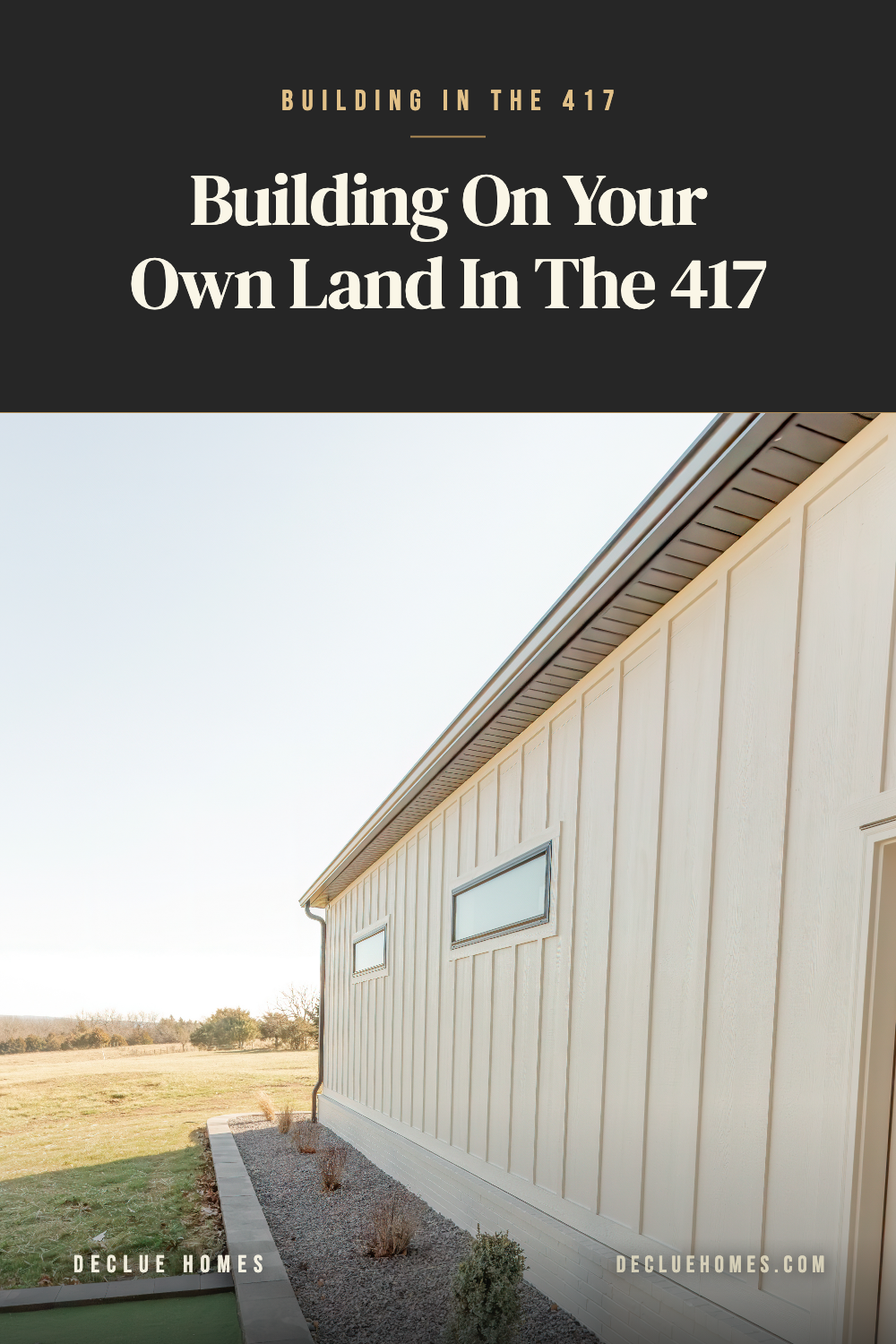
Start With the Land, Not the Floor Plan
It's natural to fall for a plan first and try to fit it to the lot later. On your own land, that order runs backward. The site sets the terms: where a house can legally sit, which direction it should face, and how water moves across the property after a hard rain. A parcel that looks flat from the road often falls away past the tree line, and that grade decides whether you're building on a slab, over a crawl space, or into a walk-out basement.
Orientation matters too — the way a home is placed on its lot shapes how it holds light and heat through the year, which the U.S. Department of Energy ties directly to long-term comfort and efficiency. This is part of why the planning phase carries so much weight: the land's constraints become the design's best ideas when they're understood early.
What's Underground Matters as Much as What's Above
The parts of a build that surprise people most are the ones they can't see. Raw land rarely comes ready to build on. It needs access — a driveway and a way for equipment to reach the site. It needs power run to it, sometimes a long way from the road. And it needs water and waste handled, which on rural 417 property usually means a private well and a septic system rather than a municipal hookup.
Those systems carry their own siting rules and soil tests; the EPA's guidance on septic systems is a good primer on why the ground has to be evaluated before anything gets designed. Soil type, depth to bedrock, how a site drains — all of it shapes the foundation and the budget. We talk about these site costs plainly and early. An honest number you can plan around is worth more than a comfortable one that changes later — the same straight-answer standard you should expect from any builder you're considering.
Permits, Setbacks, and Building Outside the City
Building on your own land in the 417 often means building outside city limits, and the rules shift when you do. County requirements, setback lines, easements, and floodplain boundaries all help decide where a house can go and how far it has to sit from a property line or a road. Permitting takes time — often months before ground is broken — and residential construction follows the building codes that govern how a home is framed, wired, and sealed.
If you haven't closed on the parcel yet, walking it with a builder before you buy can keep you off a lot that fights the home you want — a natural first step in what to know before you build. None of this is meant to slow you down. It's the part of building here that rewards knowing the ground rules before you commit to a design. There's real advantage to building in southwest Missouri, and knowing how to work with the local land is a large part of it.
Bringing the Home to the Land
Once the land is understood, a home can be designed to it instead of forced onto it. The best custom homes on private property feel almost inevitable — placed where the light is right, turned toward the view, set at the grade the site wanted all along. That's the work: not dropping a plan onto a lot, but building a home that belongs to its ground. It starts with the land, long before it shows up in the walls.
